
Why Personalization Became the Internet's Favorite Feature
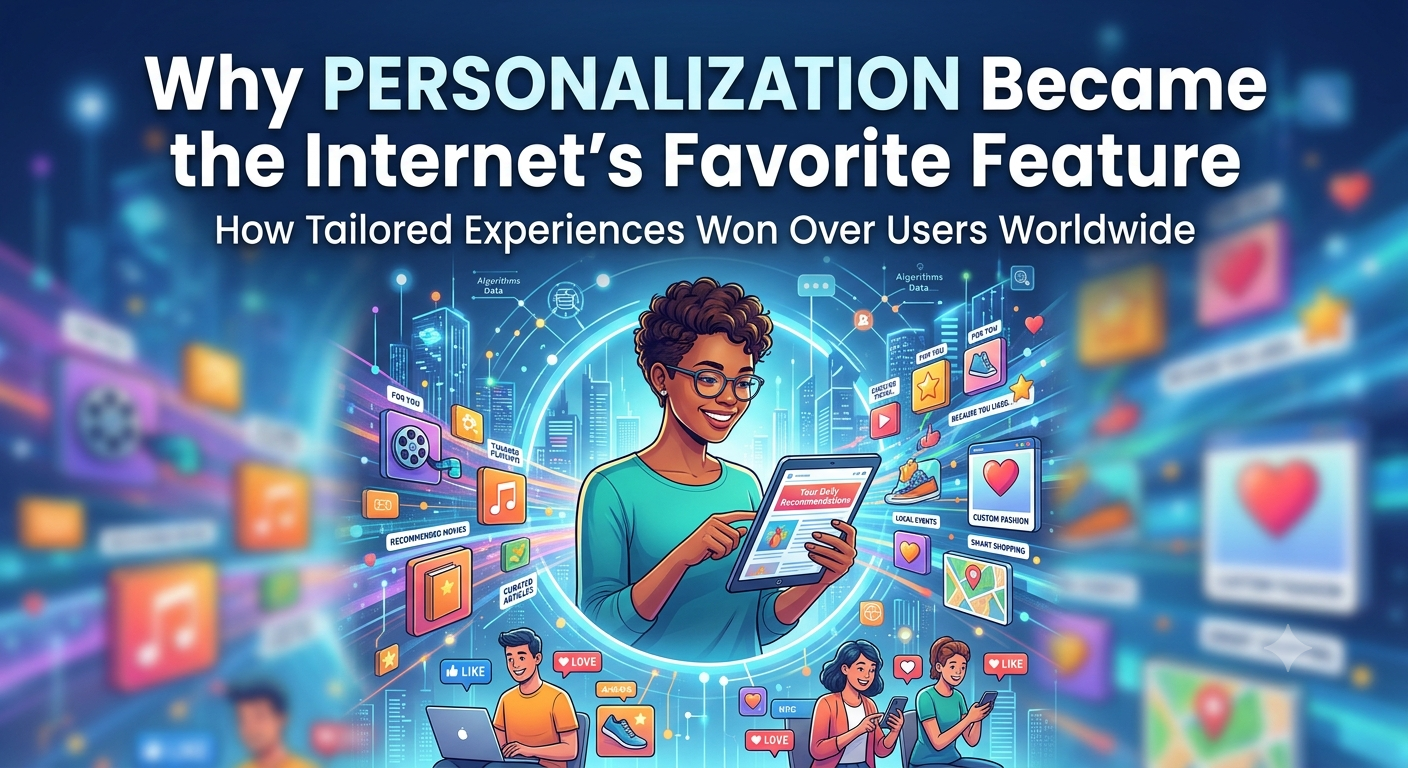
Nobody asked for personalization at first.
The early internet wasn't built around individual preferences. Everyone saw roughly the same websites, the same homepages, and often the same content. Finding something interesting usually required effort. You searched for it, stumbled across it, or heard about it from somebody else.
That version of the internet feels surprisingly distant now.
Today, almost every online experience adapts itself in some way. Recommendations appear automatically. Feeds rearrange themselves. Platforms learn what users spend time looking at.
Most people barely notice it happening anymore.
Choice Used To Look Different
Years ago, having options meant opening multiple websites.
If one site didn't have what you wanted, you visited another.
Then another.
The process wasn't complicated, but it required active decisions.
Modern platforms handle much of that work automatically. Instead of asking users what they want every few minutes, systems attempt to predict it in advance.
Sometimes those predictions are accurate.
Sometimes they miss the mark completely.
Either way, users have become accustomed to experiences that feel tailored rather than generic.
The Smallest Details Often Matter Most
People tend to focus on major features when discussing technology.
The reality is usually less dramatic.
Tiny details often have a bigger impact.
A recommendation that appears at the right moment.
A category that feels unusually relevant.
A suggestion that introduces someone to something they wouldn't have found on their own.
Those small moments shape how users experience the internet far more than most redesigns ever will.
Discovery Has Become Easier
One thing the internet does exceptionally well is introduce people to things they weren't actively searching for.
A person opens a website for one reason and leaves with three new interests.
That happens constantly.
Sometimes it's a creator.
Sometimes it's a community.
Sometimes it's an entirely different category of content.
The internet has become remarkably efficient at turning casual curiosity into exploration.
People Enjoy Feeling Like Something Was Made For Them
There's a reason customized experiences became popular so quickly.
They feel personal.
Not necessarily because they are personal, but because they create that impression.
When users encounter content that aligns with their interests, they're more likely to spend time with it. The experience feels less random.
That's true across almost every category online.
Music.
Gaming.
Streaming.
News.
The pattern repeats everywhere.
The Shift Happened Gradually
Looking back, it's easy to assume personalization arrived suddenly.
It didn't.
The change happened over years.
Small features appeared one at a time.
Recommendation systems improved.
Search results became smarter.
Platforms started learning from user behavior.
Eventually people stopped thinking about personalization as a feature and started treating it as a normal part of being online.
That's usually how major internet shifts happen.
Quietly.
Curiosity Still Drives Everything
For all the discussion around algorithms and technology, curiosity remains the real engine behind most online activity.
People click because they're interested.
They explore because they want to see something new.
They follow recommendations because there's always a chance they'll discover something unexpected.
Technology can guide attention, but curiosity is what makes users follow the path.
Without it, most platforms would feel much less interesting.
Why New Forms of Content Keep Appearing
Internet audiences rarely stay satisfied with the same experience forever.
Eventually people look for something different.
Not necessarily something better.
Just different.
That's one reason new formats, communities, and tools continue appearing every year. Users naturally gravitate toward experiences that offer a fresh perspective or a new way to interact with familiar ideas.
The cycle has repeated itself for decades.
There is no sign of it slowing down.
Personalization and Modern Content
As digital tools continue evolving, personalization becomes part of more conversations. Instead of relying exclusively on broad categories, users increasingly explore experiences that feel specific to their interests and preferences.
That helps explain why discussions around platforms such as https://clothoff.net/ai-porn often appear within broader conversations about customized digital experiences. Whether people are interested in technology, creativity, or simply exploring new formats, the appeal usually comes back to the same idea: people enjoy experiences that feel less generic and more tailored to what they're looking for.
The technology may change.
The preference doesn't.
Looking Ahead
Predicting the next major internet trend is nearly impossible.
What feels much easier to predict is the continued demand for personalization.
Users have spent years becoming accustomed to digital experiences that adapt around them.
Once that expectation exists, it rarely disappears.
The platforms may evolve.
The tools may evolve.
But people will probably continue looking for experiences that feel relevant to their own interests rather than designed for everyone at once.
Closing Thoughts
A lot of internet history can be explained by a simple idea.
People like choice.
Not endless choice.
Relevant choice.
The platforms that understand this tend to hold attention longer than those that don't.
That's why personalization became so common across the web. It wasn't forced on users.
People responded to it naturally because it made the internet feel a little less crowded and a little more personal.
And for many users, that's exactly what they were looking for.