
Why People Enjoy Creating Things Online
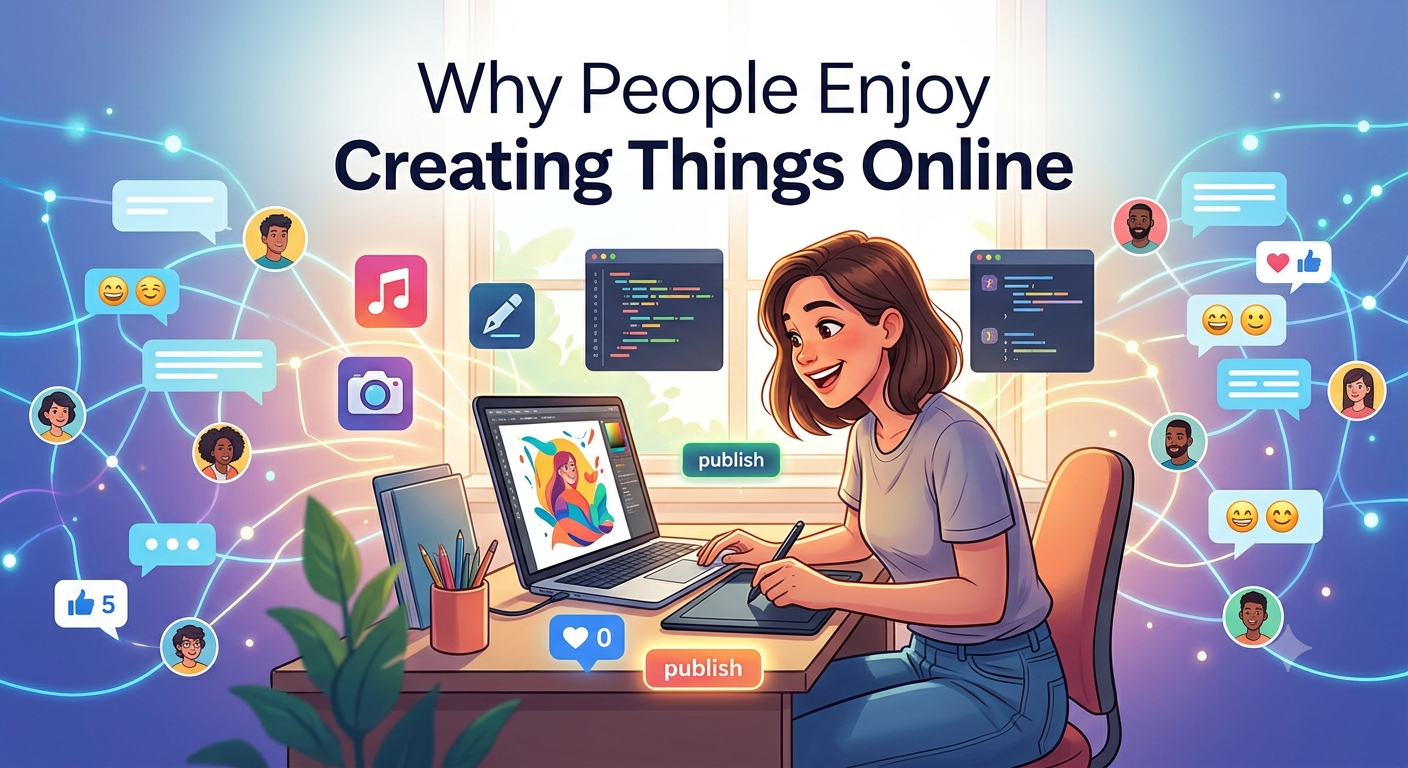
The internet was supposed to make consuming content easier.
And it did.
Movies became easier to watch. Music became easier to find. Articles became easier to read. Almost every form of entertainment became more accessible than previous generations could have imagined.
Yet something unexpected happened along the way.
A huge number of people stopped being satisfied with consumption alone.
They wanted to make things too.
The Line Between Creator and Audience Got Blurry
Years ago, the distinction was obvious.
Creators created.
Audiences watched.
The relationship felt straightforward.
Now that line is much harder to see.
Someone watches a video and creates a reaction.
Someone reads an article and writes their own version of the discussion.
Someone joins a community and starts contributing ideas.
The internet gradually transformed participation into something normal rather than exceptional.
Today, creating content is often just another part of being online.
Most People Start Small
Not everyone launches a channel or builds a website.
In fact, most creative activity begins in surprisingly simple ways.
A comment.
A meme.
A photo.
A recommendation.
A post shared with friends.
Small contributions don't always feel creative in the traditional sense, but they're part of the same process.
People enjoy adding something of their own instead of simply observing what others have made.
Creation Feels Different Than Consumption
Watching content is relaxing.
Creating content feels rewarding in a different way.
There's satisfaction in turning an idea into something tangible, even if the result isn't perfect.
That feeling explains why creative communities continue attracting new members year after year.
People like seeing what they're capable of producing.
Sometimes the process matters more than the outcome.
The Internet Made Experimentation Easy
One reason creativity expanded online is that experimentation became incredibly accessible.
You no longer need expensive equipment to try something new.
You don't need permission.
You don't need a large audience.
You can simply start.
If the result works, great.
If it doesn't, nobody remembers by next week.
That freedom encourages people to experiment in ways that weren't always practical before.
Nobody Starts as an Expert
A funny thing happens when people look at successful creators.
They often assume those creators knew what they were doing from the beginning.
Most didn't.
The internet is filled with examples of people improving publicly.
Their early work was rough.
Their ideas were unfinished.
Their skills developed gradually.
That's one reason creative communities can feel welcoming.
Everyone understands that improvement is part of the process.
People Enjoy Putting Their Own Spin on Things
Not every creator wants to invent something completely original.
Many simply enjoy reinterpreting existing ideas.
A different perspective.
A different style.
A different approach.
This behavior appears everywhere online.
Gaming communities do it.
Artists do it.
Writers do it.
Even casual users do it without realizing.
The internet thrives on variation.
One idea becomes ten.
Ten become a hundred.
The cycle never really stops.
Tools Come and Go
Every few years, a new tool captures attention.
People rush to try it.
Communities discuss it.
Some users dismiss it immediately.
Others spend weeks experimenting with it.
The pattern is familiar because it repeats constantly.
Most tools eventually fade into the background.
A handful become part of everyday internet culture.
The difference usually depends on whether people find creative uses for them.
Technology alone isn't enough.
People need a reason to keep coming back.
Why Curiosity and Creativity Work Together
Curiosity often starts the process.
Creativity keeps it going.
Someone discovers a new platform and decides to explore it.
Then they start testing ideas.
Then they share results.
Then other people join the conversation.
That's how many online communities grow.
Not through advertising campaigns, but through users finding interesting ways to interact with something new.
More People Want Control Over the Experience
One noticeable shift over the last decade is that users increasingly prefer experiences they can shape themselves.
They choose playlists instead of listening to whatever is playing.
They customize feeds.
They personalize recommendations.
The same mindset appears in creative spaces.
People enjoy having influence over what they see and how they interact with content.
That's one reason conversations around free ai porn generator tools continue spread ing through different online communities. For many users, the appeal isn't simply viewing content. It's the ability to experiment, adjust ideas, and explore different outcomes rather than relying entirely on predefined options.
That sense of involvement matters more than many platforms realize.
Looking Forward
The internet isn't running out of content.
If anything, the opposite problem exists.
There is more content available than anyone could realistically consume.
What continues growing is the demand for participation.
People want to contribute.
They want to experiment.
They want to leave some trace of their own ideas behind.
That's unlikely to change anytime soon.
Closing Thoughts
For all the discussion about technology, platforms, and algorithms, one simple fact remains.
People enjoy creating things.
Some create professionally.
Others create casually.
Many don't even think of themselves as creators.
But every day, millions of users contribute something to the internet that wasn't there before.
A comment.
A design.
A joke.
An idea.
That's part of what keeps the web interesting.
Not just what people consume.
What they create.