
The Internet Taught Everyone to Expect Instant Results
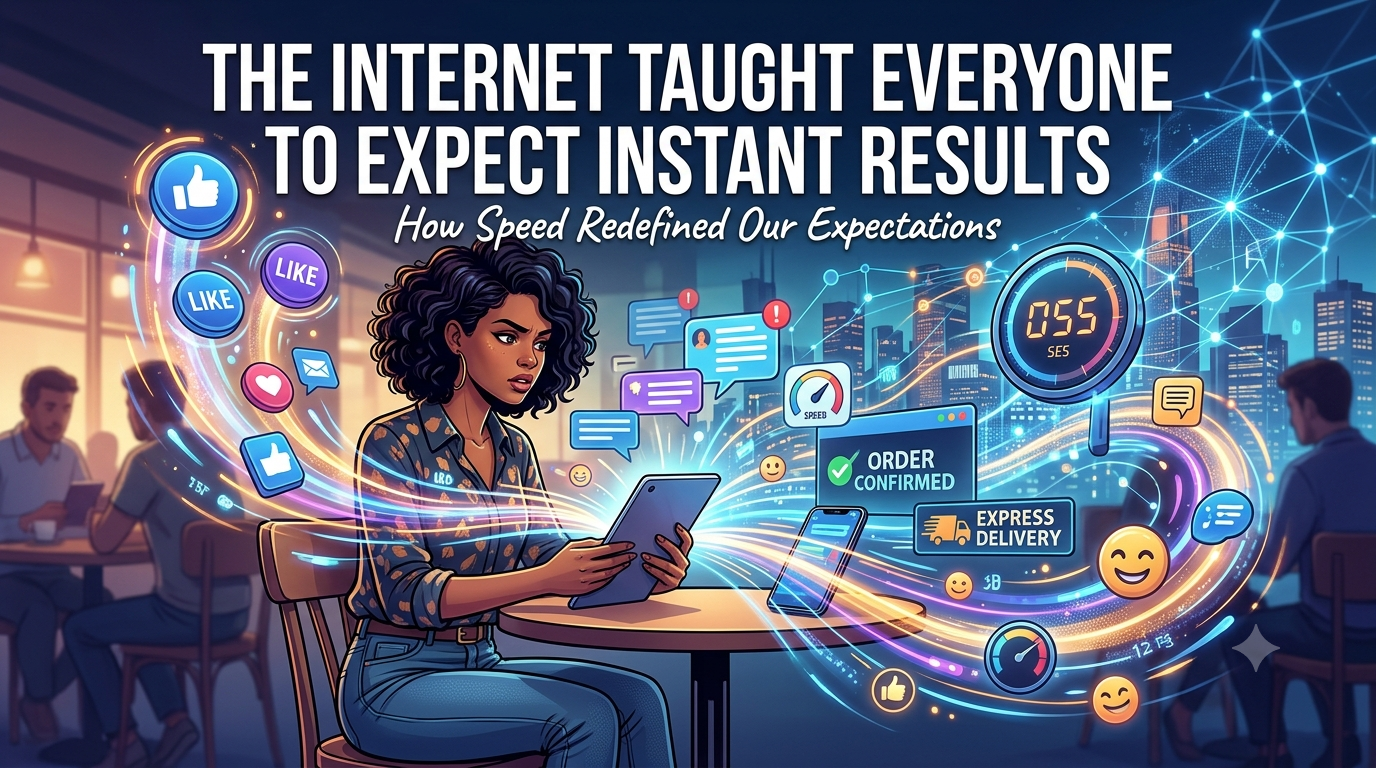
Waiting used to be a normal part of being online.
You waited for pages to load.
You waited for downloads to finish.
You waited for someone to reply to a message.
Nobody liked it, but it was part of the experience.
Today, even a few extra seconds can feel surprisingly long.
Somewhere along the way, internet users got used to getting what they wanted almost immediately.
And once that expectation appeared, it started influencing everything.
Convenience Became the Standard
Think about how many digital services compete for attention now.
If one platform feels slow, another is only a few clicks away.
That simple reality changed user behavior.
People became less patient.
Not necessarily because they wanted to be.
Because alternatives became easier to find.
The modern internet rewards convenience in a way earlier versions never could.
Users don't need to settle anymore.
Most Frustrations Are Tiny
When people stop using a website, the reason usually isn't dramatic.
It's rarely a single catastrophic problem.
More often it's a collection of small annoyances.
A confusing menu.
Too many steps.
A search feature that doesn't work well.
A page that feels cluttered.
Individually, none of those issues seem important.
Together, they can push people elsewhere.
People Rarely Read Everything
Website owners often imagine users carefully exploring every section.
Reality looks different.
Most visitors skim.
They scan headlines.
They jump between sections.
They look for signals that tell them whether something is worth their time.
That's not laziness.
It's adaptation.
The internet presents more information than anyone could realistically process.
People learned how to move through it efficiently.
Speed Changes Expectations
A fast experience doesn't stay impressive forever.
After enough exposure, it becomes normal.
Then users start expecting it everywhere.
That's one reason digital habits evolve so quickly.
The moment a convenience becomes common, it stops feeling like a bonus.
It becomes a requirement.
Platforms that fail to keep up often discover how quickly expectations can change.
The Best Experiences Feel Effortless
When a website works well, most users never think about it.
They simply use it.
The navigation makes sense.
The content is easy to find.
Nothing gets in the way.
Ironically, the best digital experiences often go unnoticed because they remove friction rather than drawing attention to themselves.
People remember frustration.
They rarely remember smooth functionality.
Habits Are Built Faster Than Ever
A decade ago, users spent more time learning how platforms worked.
Today, many people decide within minutes whether something deserves their attention.
That sounds harsh, but it makes sense.
The internet offers endless alternatives.
Users don't need to commit to every new platform they encounter.
They can try something, form an opinion, and move on quickly.
That flexibility changed how online habits develop.
Familiar Patterns Keep Winning
Even as technology changes, certain design choices continue appearing everywhere.
There's a reason for that.
People prefer familiar experiences.
They don't want to relearn basic interactions every time they visit a new website.
A platform can introduce new ideas while still feeling recognizable.
The balance matters.
Too much familiarity becomes boring.
Too much change becomes confusing.
The most successful services usually land somewhere in the middle.
Why People Explore New Digital Tools
Curiosity hasn't disappeared just because users value convenience.
If anything, the opposite is true.
People enjoy discovering tools that promise a different experience, especially when those tools remove limitations or simplify something that previously felt complicated.
That's one reason discussions around clothoff continue appearing across different online communities. Some users are interested in the technology itself. Others simply want to see whether a new tool offers something they haven't experienced before.
That instinct isn't unique to any particular platform.
It's part of how internet culture has always worked.
Nobody Wants More Work Online
The internet became popular because it made things easier.
That expectation remains surprisingly consistent.
Whether someone is looking for information, entertainment, or a community, they usually prefer experiences that feel straightforward rather than complicated.
Platforms that understand this often have an advantage.
Not because they're revolutionary.
Because they respect the user's time.
Looking Back
If you compare today's internet to the one people used fifteen or twenty years ago, the technology is obviously different.
What's more interesting is how expectations changed alongside it.
Users became faster.
More selective.
Less willing to tolerate friction.
More willing to leave when something doesn't feel worth the effort.
Those habits influence almost every successful platform operating today.
Closing Thoughts
The internet didn't train people to love technology.
It trained people to value convenience.
Every improvement, every shortcut, every streamlined experience pushed expectations a little higher.
Now users carry those expectations everywhere they go online.
That's why speed, simplicity, and ease of use matter so much.
People may not always notice when a platform gets things right.
But they almost always notice when it doesn't.